
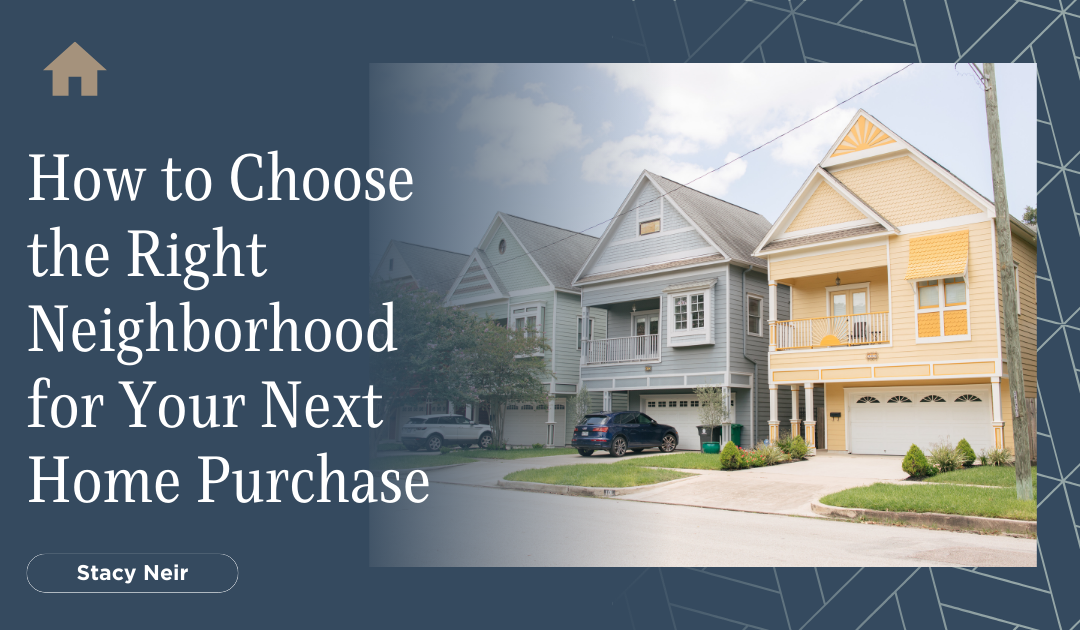
Choosing the right neighborhood is one of the most important decisions you’ll make when buying a home. It goes beyond just finding the right property; it’s about ensuring that your new community aligns with your lifestyle, priorities, and long-term goals. The neighborhood you choose can affect your daily life, from your commute to your children’s education and even your overall well-being. Here are some essential factors to consider when selecting the right neighborhood for your next home purchase.
First and foremost, location plays a crucial role in your decision-making process. Think about how far the neighborhood is from your workplace, family, and friends, and whether it offers convenient access to amenities like grocery stores, restaurants, and recreational spots. A neighborhood’s proximity to key locations such as public transportation hubs, highways, and even airports should be carefully considered. While a slightly farther location may provide more space and a lower price tag, it’s essential to weigh this against the potential time and cost of commuting.
The safety of a neighborhood is another key consideration. Before committing to a neighborhood, research crime statistics to get an accurate picture of safety in the area. Many real estate websites and apps offer neighborhood crime data, or you can contact local law enforcement for more information. Safety can impact not only your personal security but also your property’s value. A neighborhood with a reputation for being safe is more likely to retain or increase in value over time. Additionally, neighborhoods with active community watch programs or strong police presence often have a more secure environment.
Another important factor is the quality of schools. Even if you don’t have children, the quality of local schools can influence your decision. High-quality schools tend to increase property values and attract a stable, family-oriented community. Research local school ratings, test scores, and reviews to gauge their reputation. Even if you don’t have school-age children, living near good schools can be a benefit if you ever decide to sell your home in the future.
The overall aesthetic and ambiance of a neighborhood is just as important as its practical aspects. Pay attention to the general condition of the streets, parks, and homes. Is the neighborhood well-maintained? Are there parks, green spaces, or walking paths that promote an active lifestyle? An inviting, clean, and pleasant environment will make your daily life more enjoyable. Moreover, the presence of communal areas or events like farmer’s markets or block parties can help foster a strong sense of community.
You should also consider the neighborhood’s potential for growth. It’s important to look at the neighborhood’s history and future prospects. Is the area experiencing revitalization, with new businesses, infrastructure, or parks being developed? An up-and-coming neighborhood can offer great investment potential, as property values are likely to rise in the coming years. However, be cautious of areas in decline, as they may not offer the same long-term benefits. Researching local government plans for infrastructure improvements or neighborhood development can give you insight into the area’s future.
The demographics and lifestyle of the neighborhood should align with your own preferences. Do you prefer a quiet, residential area, or a more bustling urban environment with lots of activity? Is the neighborhood predominantly made up of families, young professionals, retirees, or students? Your lifestyle and preferences should match the environment, ensuring that you feel comfortable and at home in your new surroundings.
In addition to these factors, property values and the overall real estate market trends should also be considered. While a neighborhood might seem perfect, it’s important to assess whether homes in the area hold or increase in value over time. Local market conditions can affect your long-term investment, so it’s beneficial to look at recent sales data and property price trends in the area. Working with a real estate agent who is knowledgeable about the local market can help you understand the area’s pricing dynamics.
Lastly, consider the noise level and overall vibe of the neighborhood. Are there busy roads, noisy bars, or construction sites nearby that could affect your peace and quiet? On the flip side, some people enjoy living in lively, vibrant areas with lots of activity and nightlife. Depending on your preferences, it’s important to assess whether the noise level and overall energy of the neighborhood will contribute positively to your lifestyle.
Choosing the right neighborhood for your next home purchase is about balancing practical considerations with personal preferences. By taking the time to research and explore different neighborhoods, you can find one that fits your needs, enhances your quality of life, and supports your long-term goals.